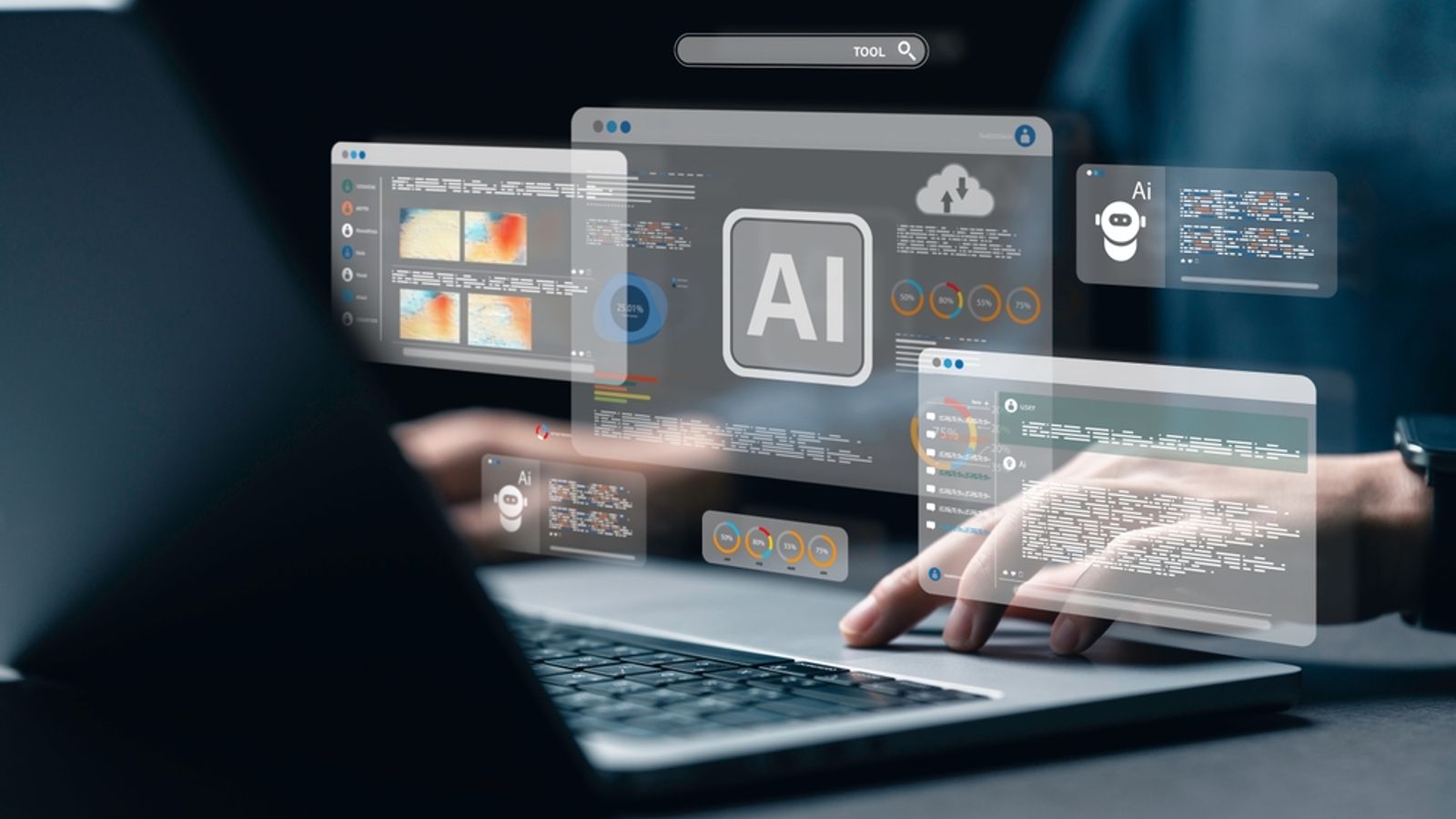
At Baufest, for example, we leverage this technology to optimize key aspects of our daily operations, allowing us to gain both speed and quality. Furthermore, it drives technological innovation and continuous improvement, directly enhancing our capacity to build market-differentiating solutions for our clients.
One of the fields where we see the most significant impact is software development—particularly during the delivery phase, as well as in code generation, testing, deployment, and debugging. In this space, automation tools boost efficiency and eliminate repetitive tasks that would otherwise consume valuable time. They also help us reduce errors that delay workflows. AI-assisted development tools—such as Microsoft's GitHub Copilot or AWS's Amazon CodeWhisperer—do not replace the role of software developers, but rather empower them to be more efficient and productive.
In a controlled experiment conducted with a generative AI tool, developers who had access to an AI pair programmer completed their assigned task 55.8% faster than the control group. While we have not performed a direct internal benchmark of that exact structure, we have observed a notable increase in developer productivity.
Beyond Coding
AI tools do not merely assist with coding; they also empower our UX Design specialists to build user interfaces and create customer journeys more effectively. Additionally, they streamline API integrations, simplify deployment checks, and shorten time-to-feature.
Furthermore, we utilize AI solutions specifically trained to detect software bugs. These deep learning models enhance our ability to identify and fix flaws—a process that can often be complex and costly for development organizations. However, as these tools continue to mature and occasionally flag false positives, every output is thoroughly reviewed by our professional staff.
Automated Testing
Another way AI helps us optimize the development process is through automated testing. Automated testing validates software functionality and ensures it meets requirements before being deployed to production.
While every test environment must be configured, automated testing delivers significant value for repetitive scenarios—allowing organizations to execute specific tests at a much faster pace without requiring manual oversight. That is why we combine automation with manual testing to accelerate overall delivery schedules.
AI-driven test automation delivers key benefits:
- Time savings.
- Process error prevention and increased accuracy.
- Simplified test execution (AI can generate complex test cases in hours).
- Easier test maintenance.
Synthetic Data
AI also plays a major role in software testing through the use of synthetic data—information artificially created to mimic real datasets. These algorithmic, non-real datasets serve as proxies for live data during testing.
Real user data cannot be used in testing environments due to strict regulatory compliance and data privacy requirements. Synthetic data replaces privacy-sensitive information while satisfying specific test conditions that may not exist in production data.
AI enables the rapid generation of synthetic data for application testing, adhering to the same parameters and structural rules as the original database. This approach significantly speeds up and optimizes quality assurance activities.
With synthetic data technology, teams can generate customized data digitally, quickly, and at scale. However, organizations must ensure that automated synthetic data generation can adjust dynamically as business requirements evolve.
AI-Powered Cybersecurity
In our cybersecurity practices, we leverage AI to detect and mitigate an increasing number of cyber threats, especially in an industry facing a global talent shortage.
AI-driven solutions employ machine learning algorithms capable of detecting and responding to both known and unknown threats in real time. We train these models on vast amounts of historical threat data, network traffic, and endpoint telemetry to identify subtle patterns indicative of a cyberattack. These systems are designed to continuously learn and adapt as new threat vectors emerge.
In cybersecurity, AI is utilized for malware and phishing detection, network anomaly monitoring, and endpoint threat response. We also employ it for vulnerability analysis, patch management, breach risk prediction, user authentication, spam filtering, bot identification, behavioral analytics, and fraud detection.
These tools provide greater efficiency, scalability, and precision. By automating routine security operations, they free cybersecurity analysts to focus on complex, critical tasks such as incident response. Moreover, AI drives a proactive cybersecurity posture—strengthening best practices and minimizing the attack surface rather than merely reacting to malicious activity. It also enables teams to adapt to a rapidly evolving threat landscape where cybercriminals are actively using AI to launch sophisticated attacks.
According to a industry report, three out of four surveyed executives noted that AI allowed their organization to respond faster to breaches, while 69% stated that AI was necessary to respond effectively to cyberattacks.
Data Management
As noted, machine learning algorithms can analyze massive datasets to predict behavior and identify hidden patterns. In software development, this helps predict user interactions, optimize system performance, and automate routine operational tasks.
In data management specifically, AI assists with data classification, cataloging, and quality enhancement (reducing data errors), while simplifying data integration to create master data lists.
AI-powered data analytics enables faster, more efficient data processing. It grants rapid visibility into data structures, helping organizations make better decisions, optimize planning strategies, improve operational efficiency, and elevate the overall customer experience (CX).
Human-Centric AI
At Baufest, we are pleased with how AI has enhanced and accelerated our digital product development capabilities. We leverage synthetic data for testing, generative AI for code development, and machine learning models to build advanced data analytics algorithms.
In software development, we use GitHub Copilot alongside proprietary Baufest tools to accelerate solution building. Additionally, we are organizing a catalog of case studies using ChatGPT as a commercial assistant to support digital solution presentations for prospective clients.
Beyond helping our clients harness AI, this technology delivers clear advantages to our internal processes and delivery practices. Utilizing these tools internally enables us to build digital products faster, with higher quality, and with robust security.
AI is fundamentally an Enabling Technology. At Baufest, our approach aligns with our core philosophy: putting people at the center and maximizing human potential across every dimension of an organization. We view Artificial Intelligence as a digital "exoskeleton"—a tool designed to empower people and simplify their work, not to replace them.