

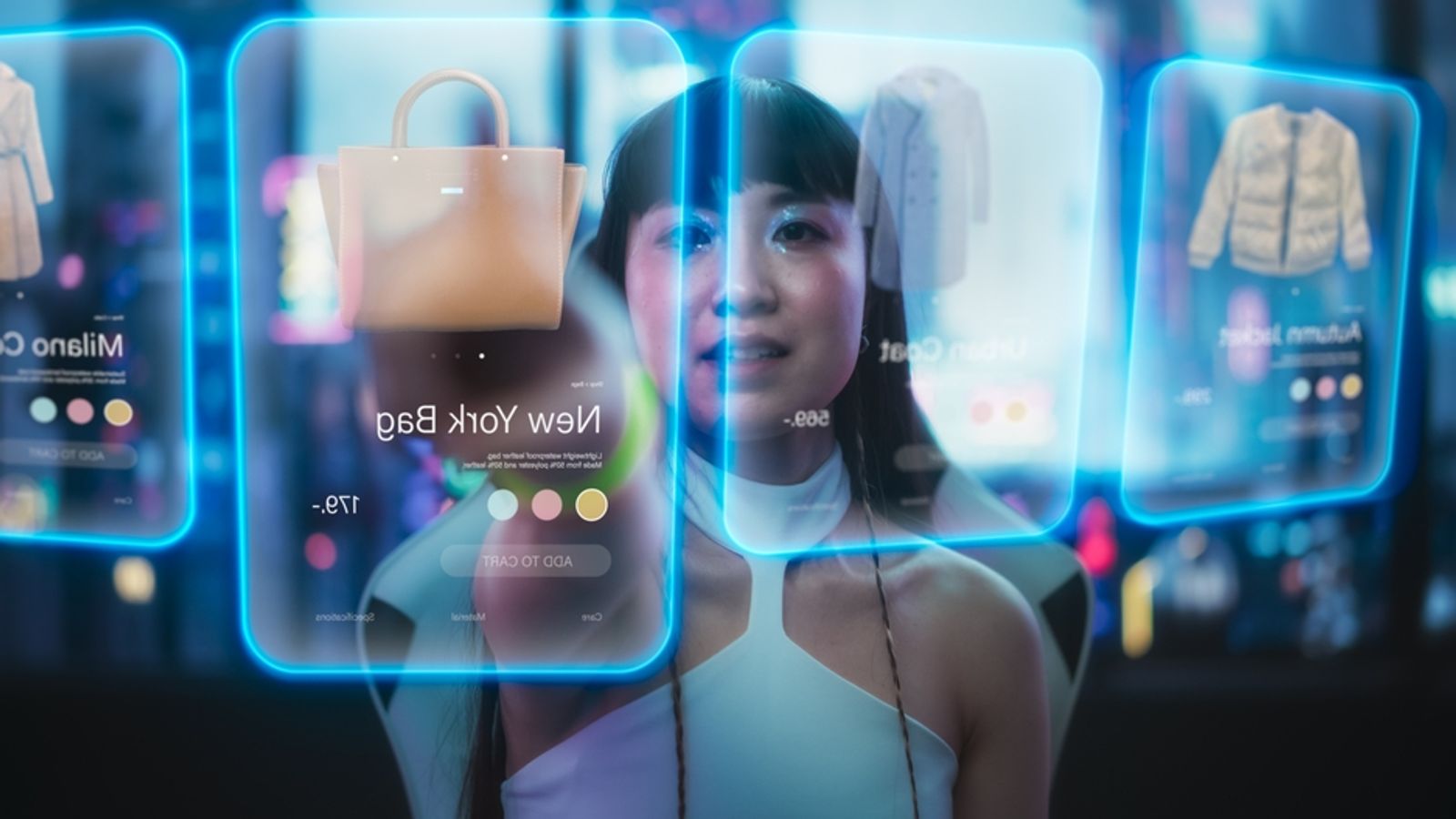
AI has become one of the most transformative technologies shaping the future of the Consumer Products and Retail industries. In recent years, organizations have increasingly leveraged AI to optimize operations, improve customer experiences, and accelerate innovation across the value chain.
The growing adoption of AI is reflected in industry forecasts. According to IDC, by 2025, one in five of the world’s top 100 retailers will use AI-powered systems, supported by integrated data across planning, decision-making, operations, and retail optimization. IDC also projects that Latin America’s AI software market will continue to grow rapidly, with retail among the sectors leading adoption.
Consumer products companies are embracing this transformation as well. Research from McKinsey & Company shows that manufacturers have increasingly incorporated AI into production environments, using robotics and intelligent automation to enhance assembly processes and operational efficiency.
Today, manufacturing and consumer goods organizations recognize AI as a strategic business capability. According to IDC, 41% of business leaders are adopting AI to improve quality, 40% to increase employee productivity, and 38% to enhance business agility.
These figures highlight AI’s growing role in optimizing key business processes, from personalizing customer experiences and improving sales recommendations to automating visual inspection, defect detection, and image recognition.
A clear example is TASA, one of Peru’s leading fishing companies. Baufest developed an AI-powered solution that enables the company to automatically detect schools of fish—a highly complex task due to their constant movement.
Previously, TASA could analyze less than 10% of the data collected at sea because of its volume and the need to return to shore for manual interpretation. By applying AI and computer vision, the company developed an automated detection model that achieved between 85% and 90% accuracy during its initial validation, significantly improving operational efficiency.
Cases like this demonstrate how AI is reshaping the Consumer Products industry. Advanced machine learning algorithms help organizations improve production quality, optimize inventory management, reduce waste, and make better decisions based on data.
At Baufest, we help Consumer Products and Retail companies integrate AI into their operations while maintaining a human-centered approach. By combining technology, data, and business expertise, organizations can streamline processes, unlock new efficiencies, and deliver better experiences for customers.
As AI continues to evolve, it will play an increasingly important role in transforming the Consumer Products and Retail industries, enabling organizations to become more competitive, agile, and prepared for the future.